

Use cases
One workflow, tuned to each site.
Every environment has different incidents, camera angles and people on duty. Here is how AnomaEYE fits three of them.
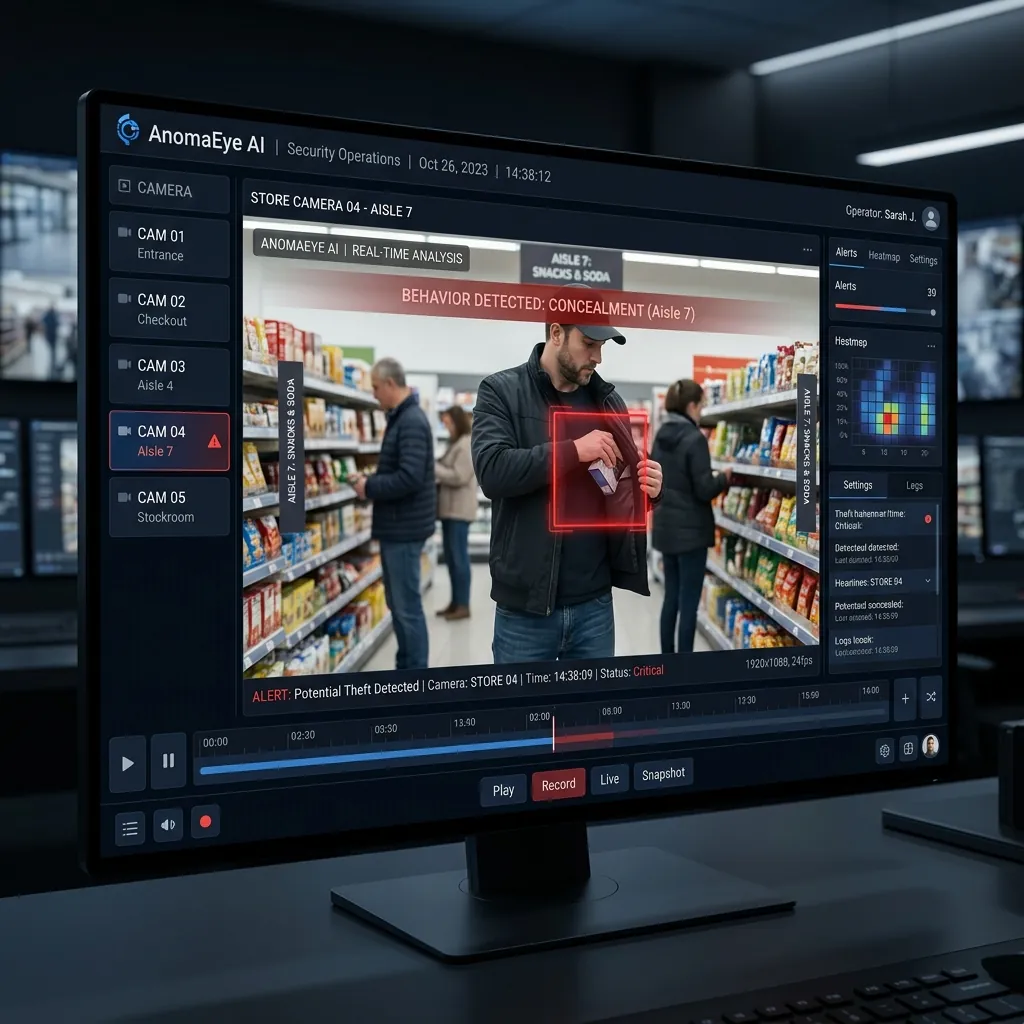
Retail stores
Theft on a shop floor is quick and easy to miss across a wall of screens. Staff need to know which camera to look at, and to see the moment before they approach anyone.
What AnomaEYE flags
- Shoplifting
- Stealing
- Robbery
- Assault
Where to point cameras
Aisles with high-value stock, entrances and exits, and the checkout area. Angled views of shelves and hands work better than distant overhead shots.
What the team sees
An alert naming the camera and category, the clip leading up to it and the live view, so a manager can decide whether to step in.
Warehousing and logistics
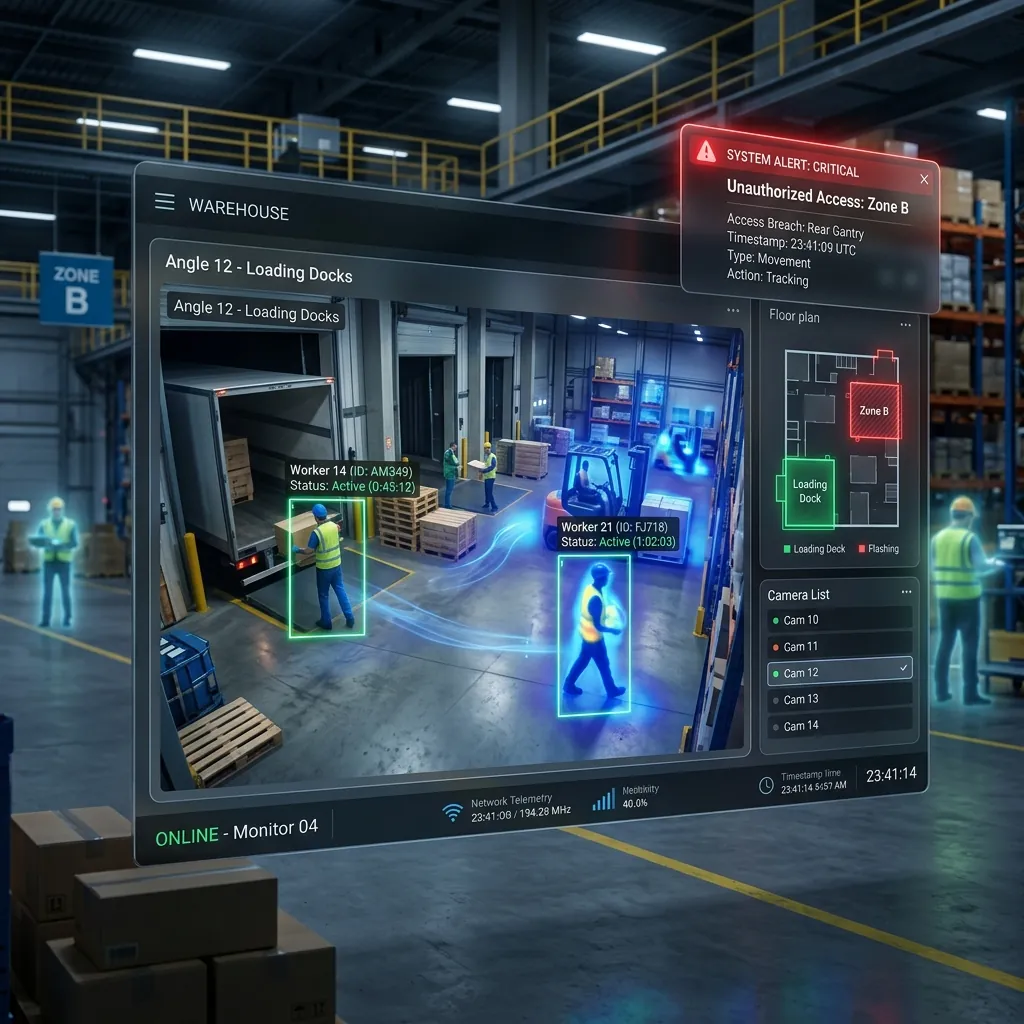
Stock, loading bays and perimeters often go unwatched at night and at weekends, which is exactly when many incidents happen.
What AnomaEYE flags
- Burglary
- Stealing
- Vandalism
- Arson
Where to point cameras
Loading doors, high-value cages, yard perimeters and gates. Steady lighting at night matters more than camera resolution.
What the team sees
An out-of-hours alert by push, SMS or the on-site siren, with a clip a supervisor can check from a phone.
Public spaces
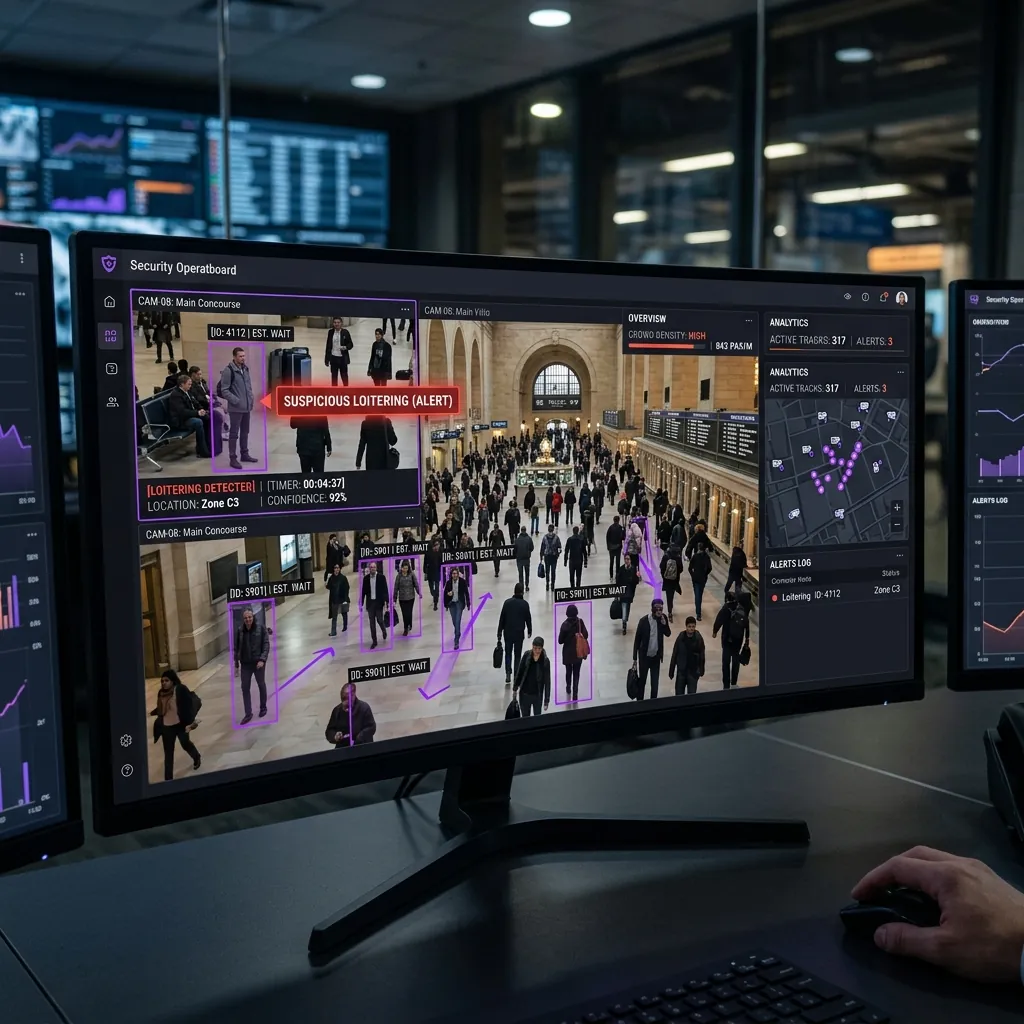
Stations, campuses and venues have many cameras and few people watching them. A fight can be over before anyone notices which screen it was on.
What AnomaEYE flags
- Fighting
- Assault
- Abuse
- Vandalism
Where to point cameras
Entrances, concourses, stairways and the quieter corners where incidents go unseen. Views that keep people fully in frame tend to work better.
What the team sees
One alert per incident to the duty team, so the nearest responder knows where to go.
Your environment
Not on this list? Tell us about your site.
We'll be straight about whether the detection scope fits what you need.